Rumate turns lived experience into building intelligence — a continuous, ungameable signal for the institutions that price, insure, and regulate housing.

3031
Buildings scored across Toronto
25
Wards
1,578
Condo corporations tracked
100%
Transparency
BETA
MEET YOUR DIGITAL WORKFORCE
Be Proactive
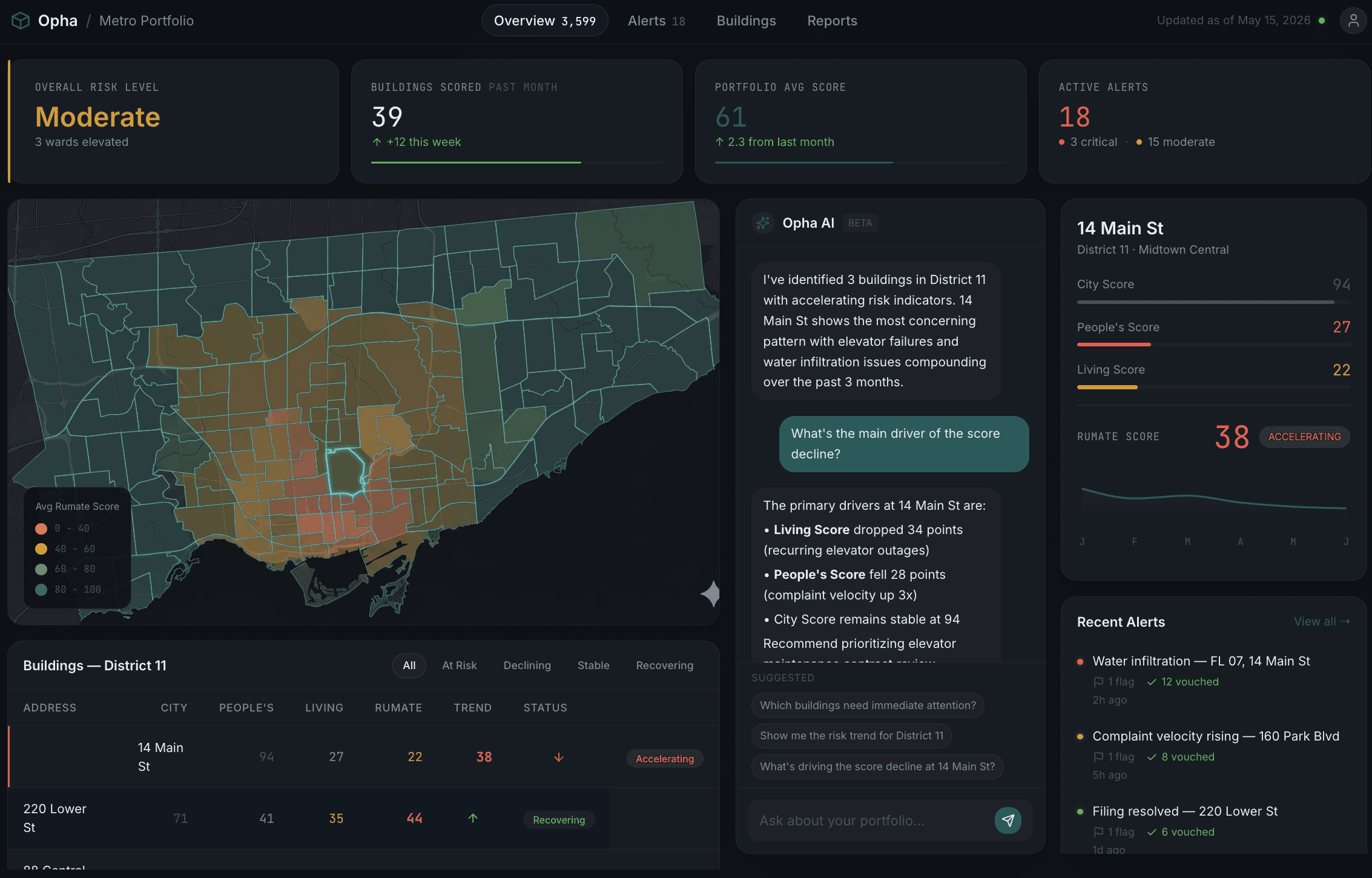
Stream real-time verified and corroborated intelligence and catch issues before they fail.
The insurance industry solved this problem in auto a decade ago.
Progressive spent billions deploying telematics hardware to capture driving behaviour in real time. P&C insurers followed with IoT sensors for water, fire, and structural monitoring. The principle is proven: continuous signal beats periodic snapshots.
Rumate applies the same principle to buildings — without the hardware.
Residents are already inside the building. Already experiencing its failures. Already generating maintenance requests, escalation patterns, and regulatory filings. That signal has always existed. It just sat fragmented across property management inboxes, 311 logs, tribunal filings, and review platforms where no institutional buyer could access or interpret it.
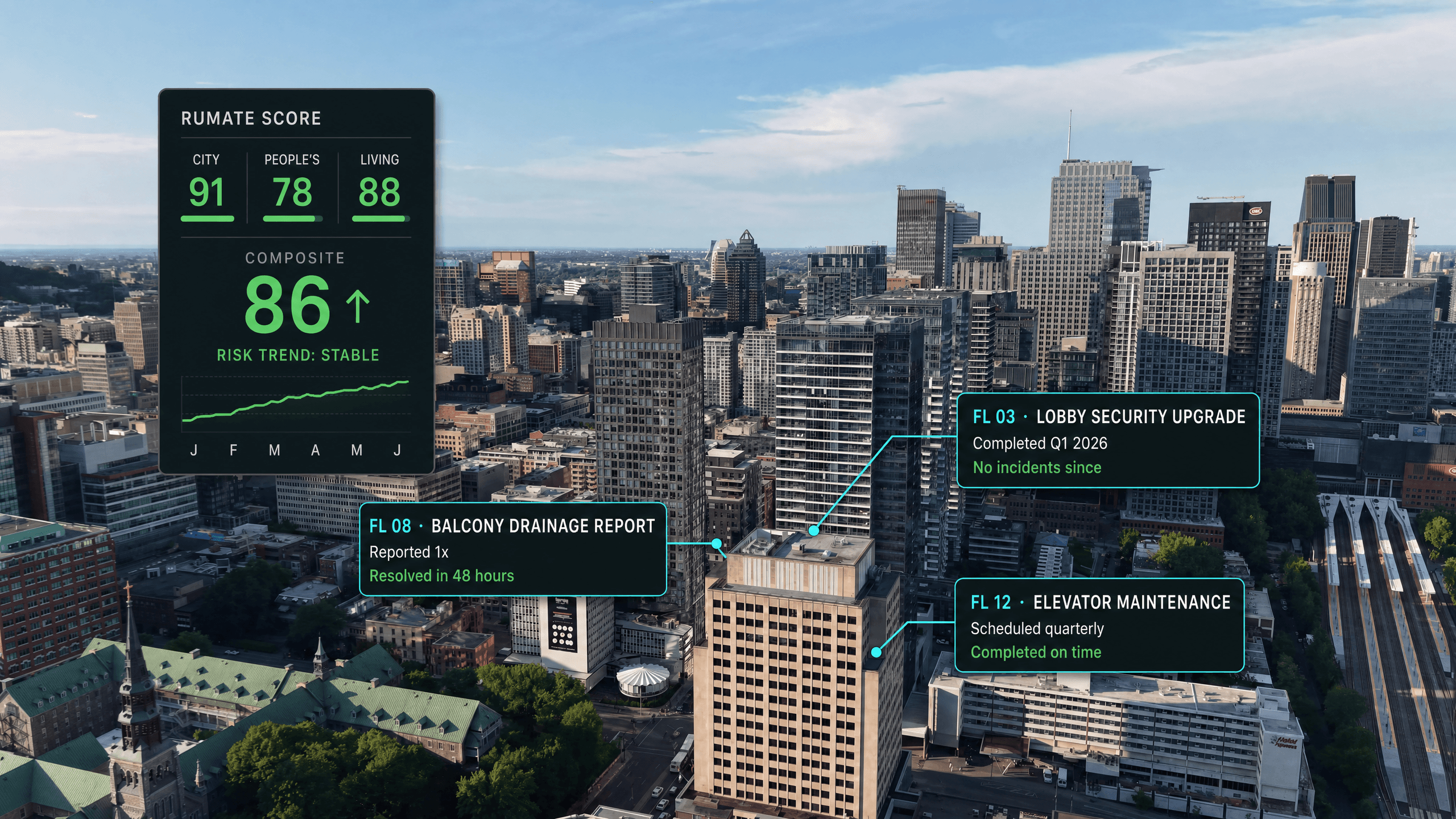
Three dimensions of building intelligence. Only one comes from inside.
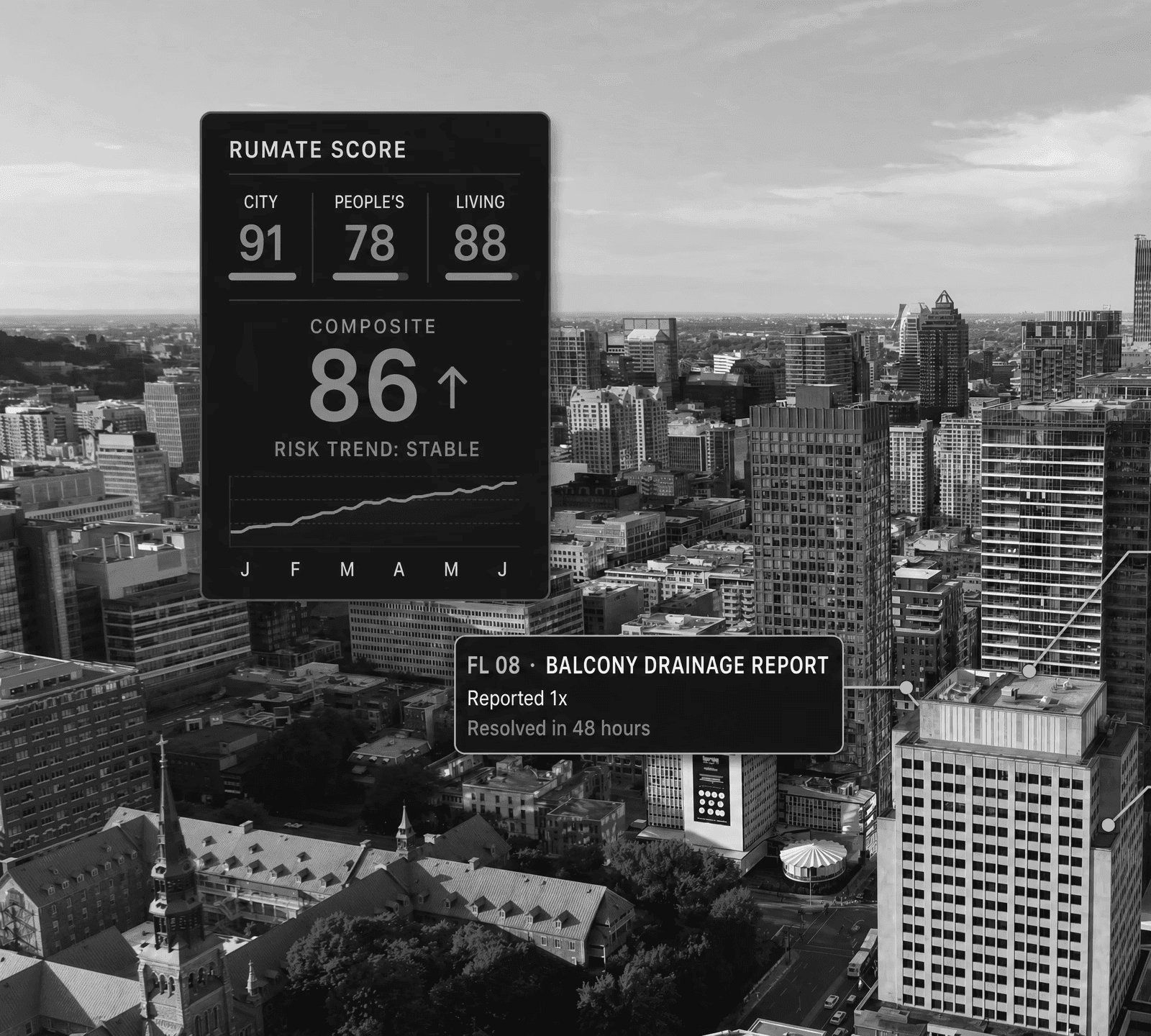
Each dimension captures a different layer of truth about a building, and its management. Combined, they form the Rumate Score: a continuously updated profile no single data source could produce alone.
01
City Score
Municipal inspections, bylaw compliance, enforcement history. The data cities already collect. Useful as a baseline, unreliable as a signal. it's periodic, under-resourced, and self-reported. A building can score 97 and be falling apart.
02
People's Score
Web presence, investigation records, news coverage, review sentiment. The public-facing footprint of a building's reputation. Harder to game than a city audit, but still indirect. It tells you what people say about a building from the outside.
03
Living Score
Corroborated condition intelligence from inside the building. Water in the walls. Elevator failures. Pest infestations. Heating outages in January. Not complaints, evidence. Vouched for by multiple residents, tracked over time, measured against management response. How fast was it fixed. Did it happen again. Is the pattern getting worse.
This is the data anyone would act on instantly if a resident told them in person. Rumate makes that conversation happen at scale.
The three dimensions converge into a single Rumate Score: a continuously updated risk profile that tells you more about a building's true condition than any inspection, appraisal, or claims history ever could.
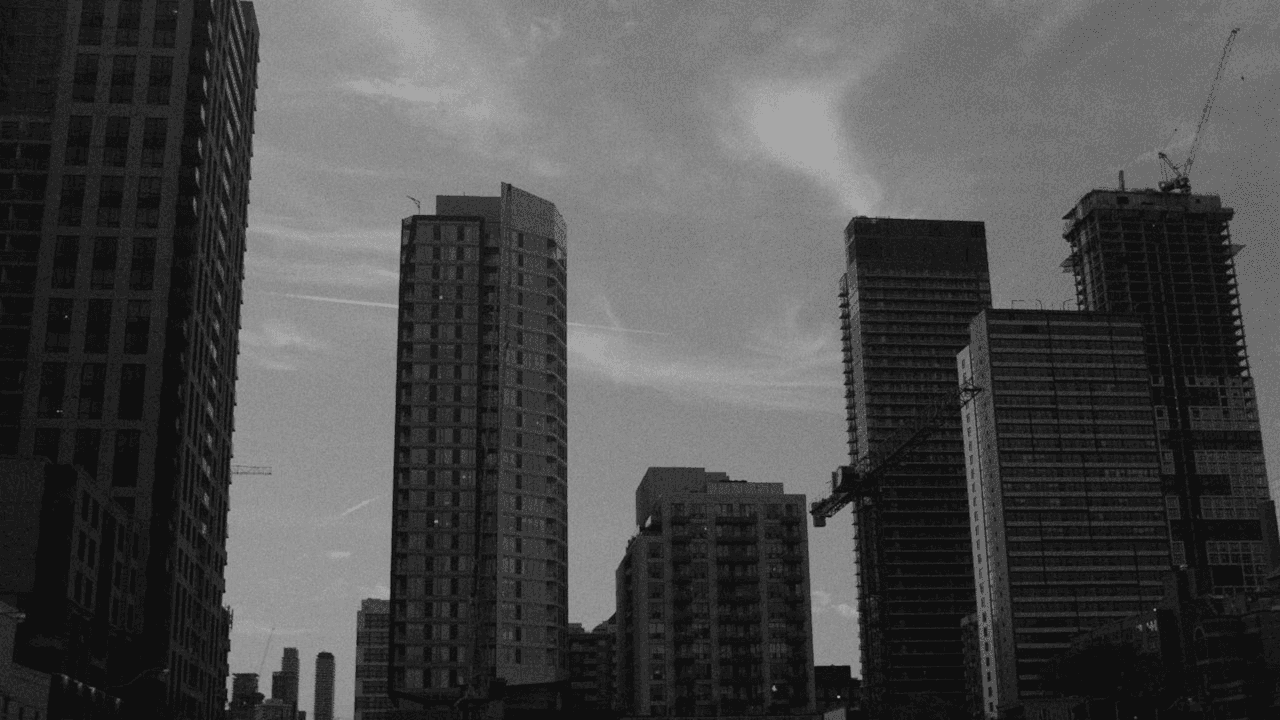
*** College St, Toronto. 72 days from report to remedy.
A building in critical condition. 2 resident initiated T6 cases. A property manager found soliciting rent in defiance of a formal Assignment of Rents. The replacement PM demanding payment methods that violate Ontario's Residential Tenancies Act. Units were listed for sale during an active enforcement action. Fourteen residents reorganized. They started to stop viewings at the door, used Tori to report to 311, and store a years worth of maintenance request, pictures, and receipts.
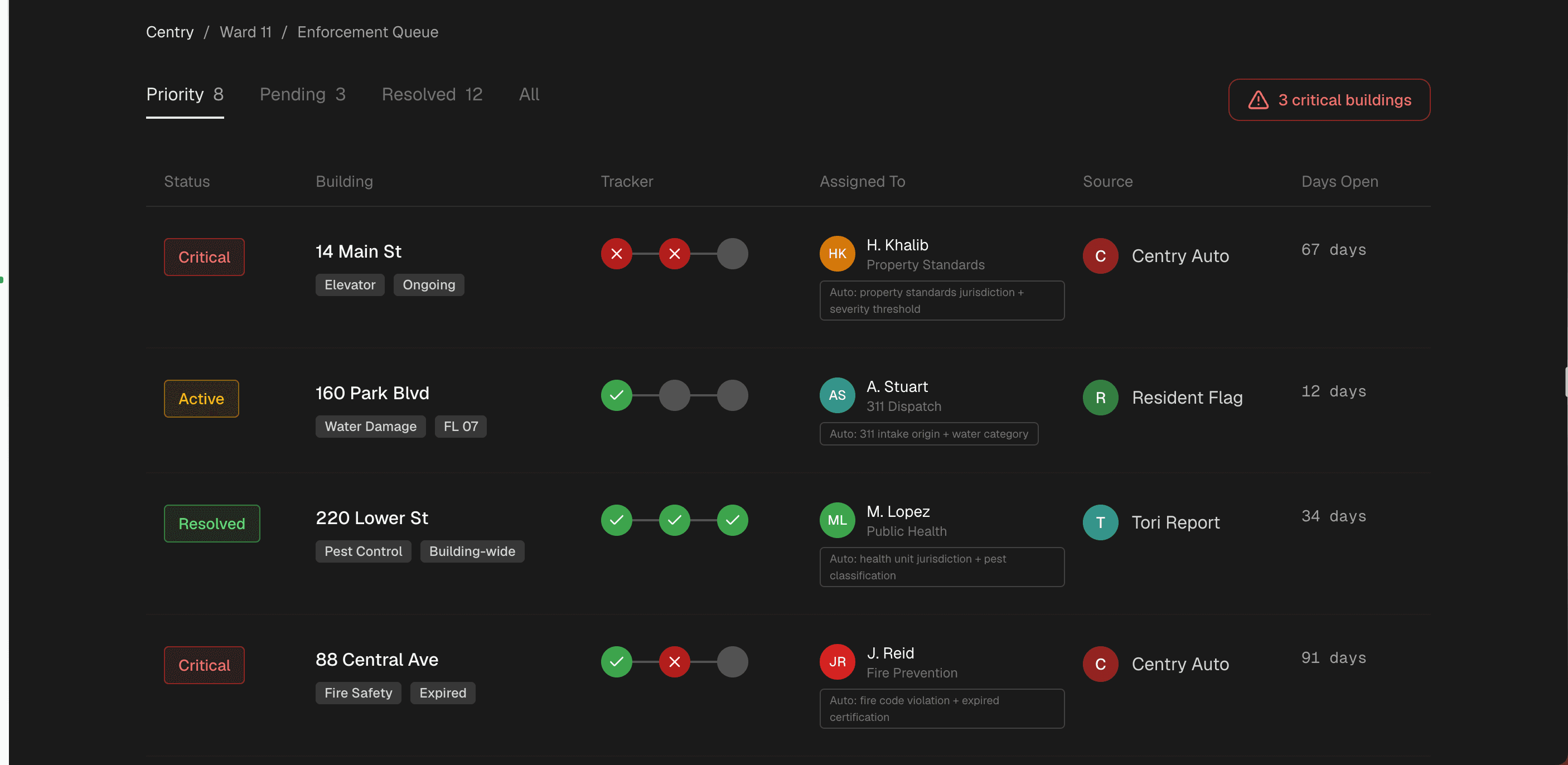
The city's own 311 supervisor confirmed: the system wasn't built to catch this.
Rumate was.
The Stack
Three Agents. One intelligence layer.
Resident-aligned by design. Not by policy.
Rumate's intelligence comes from Tori, an AI assistant that gives residents plain-language access to their rights, documentation tools, and filing assistance. Residents use Tori because it protects them. That trust generates the only honest, continuous, ground-truth signal about what's happening inside a building.
Anonymized
Consent-based
Resident-first
Auditable
Structural alignment
The business model requires resident trust to function. If residents stop trusting Tori, the signal dies.
Data anonymization
Institutional buyers purchase building intelligence, not resident data. All interactions are aggregated and anonymized.
Ungameable scoring
The building gets a score it can't game. Landlord-funded platforms cannot credibly report on the buildings paying their bills.
Consented collection
Every data point originates from a resident who chose to use Tori. No scraping personal information. No surveillance.
What institutional partners and early adopters are saying about Rumate's building intelligence platform.
“We were modeling risk from claims history and inspection scores. Rumate showed us deterioration signals 6–9 months before either source caught them.”
— VP Risk, Regional Insurer
“We knew some buildings were problematic, but we couldn’t quantify it or prioritize inspections objectively. This changes that.”
— Director of Enforcement, Municipality
“I’ve never seen building-level intelligence at this resolution. The spread between the city score and the living score tells me more than any appraisal.”
— Portfolio Manager, Real Estate Fund
Tell us what you need to underwrite, insure, regulate, or invest in — and we will show you what Rumate sees that you currently cannot.